
Do You Need a SIM Card in Japan?
If you're traveling to Japan, having internet access is essential. From using Google Maps to navigating trains, translating Japanese, and making reservations, staying connected will make your trip much smoother.
Many travelers wonder: Should I get a SIM card or an eSIM?
Both options allow you to use mobile data in Japan, but they work in different ways and suit different types of travelers.
In this guide, we’ll clearly explain the difference between SIM cards and eSIMs, and help you choose the best option for your trip to Japan.

Hola!! I love traveling. I am helping to make your Japan travel unforgettable memory!!
Who am I ?
- Japanese from Ehime 26yo(1999 generation)
- Travel lover
- I have been all prefecture (47) in Japan.
- I do not want everyone who travel in Japan regret after trip
- I want to share my experience for helping
Save this guide and choose the perfect time and place for your Japan advance
目次
What is a SIM Card?
A SIM card is a small physical chip that you insert into your smartphone to access mobile data. In Japan, prepaid SIM cards are widely available for travelers and can be purchased at airports, electronics stores, or online before your trip.
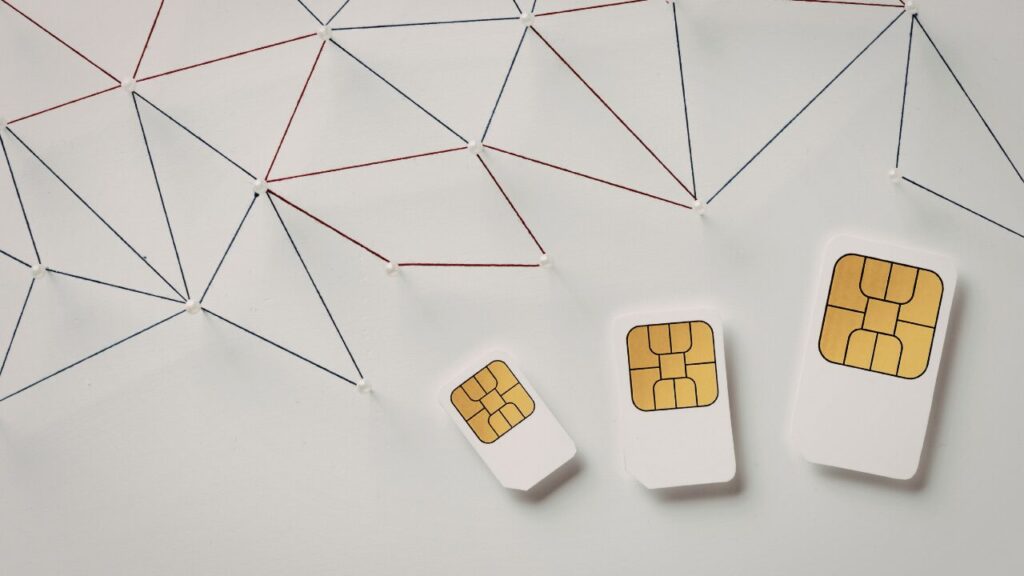
Once inserted, the SIM card allows you to connect to a local network and use the internet without relying on Wi-Fi.
Pros:
- Compatible with most smartphones
- Stable and reliable connection
- Easy to use once inserted
Cons:
- You need to remove your current SIM card
- Risk of losing your original SIM
- Requires manual setup
What is an eSIM?
An eSIM is a digital SIM that is built into your smartphone.
Instead of inserting a physical card, you can activate it by scanning a QR code or downloading a profile.
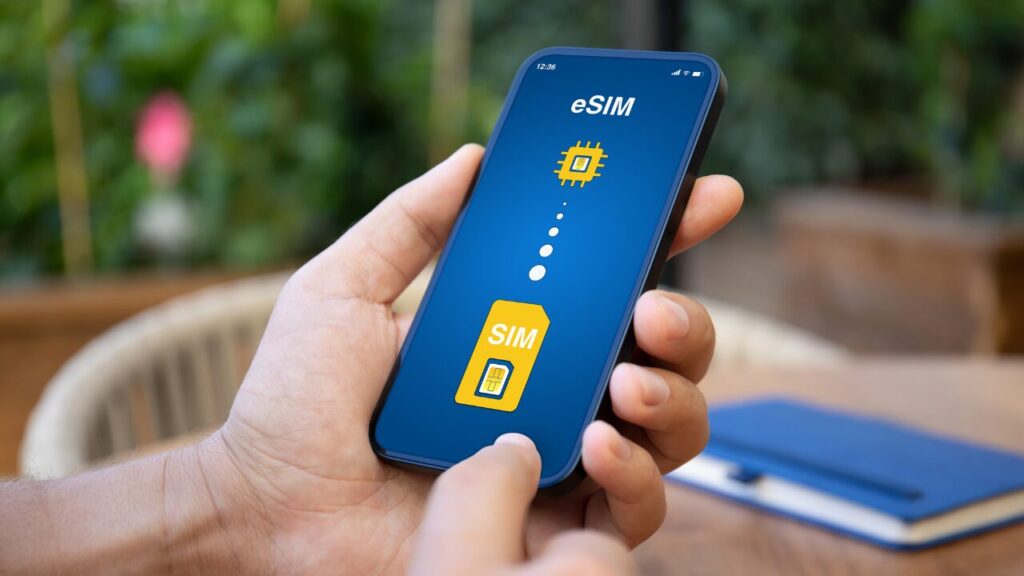
This allows you to connect to a mobile network instantly, even before arriving in Japan.
Pros:
- No need to insert or swap a SIM card
- Activate instantly online
- No risk of losing your SIM
- Can use dual SIM (keep your original number)
Cons:
- Only works on compatible devices
- Setup may be confusing for beginners
- Requires internet to activate initially
SIM vs eSIM Comparison
Setup (How to Start Using It)
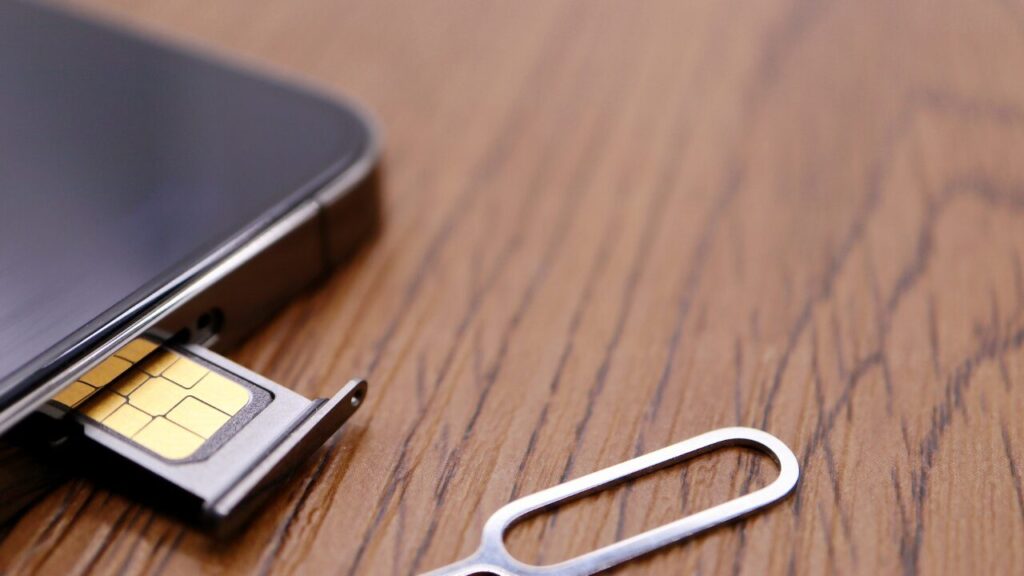
SIM: You need to insert a physical card into your phone. This usually requires removing your current SIM card.
eSIM: You can activate it by scanning a QR code or downloading it. No need to open your phone or replace anything.
Convenience (Ease of Use)
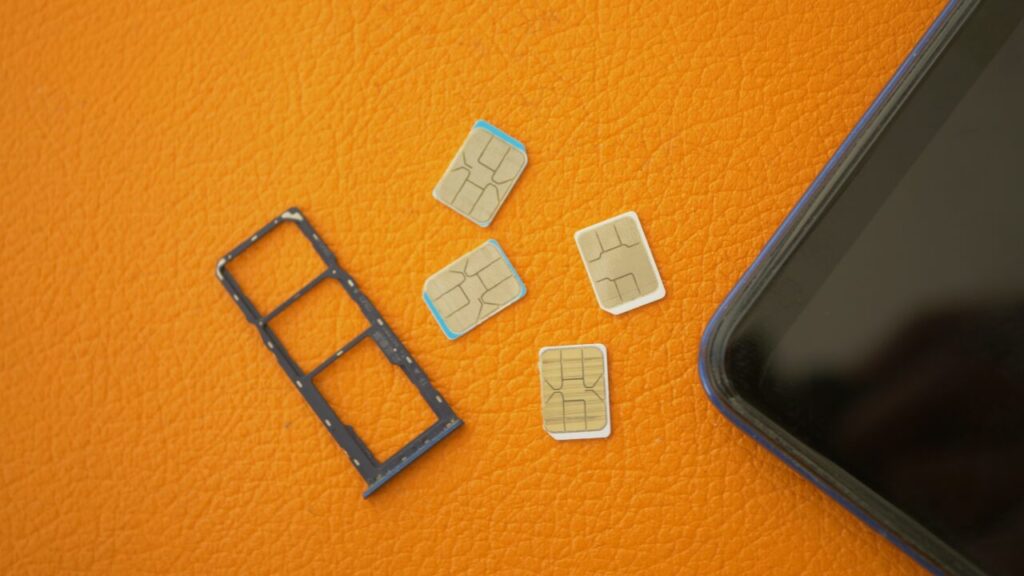
SIM: Requires manual handling, and you need to keep your original SIM safe during your trip.
eSIM: Everything is done digitally, making it quick and hassle-free, especially for short trips.
Compatibility (Device Support)
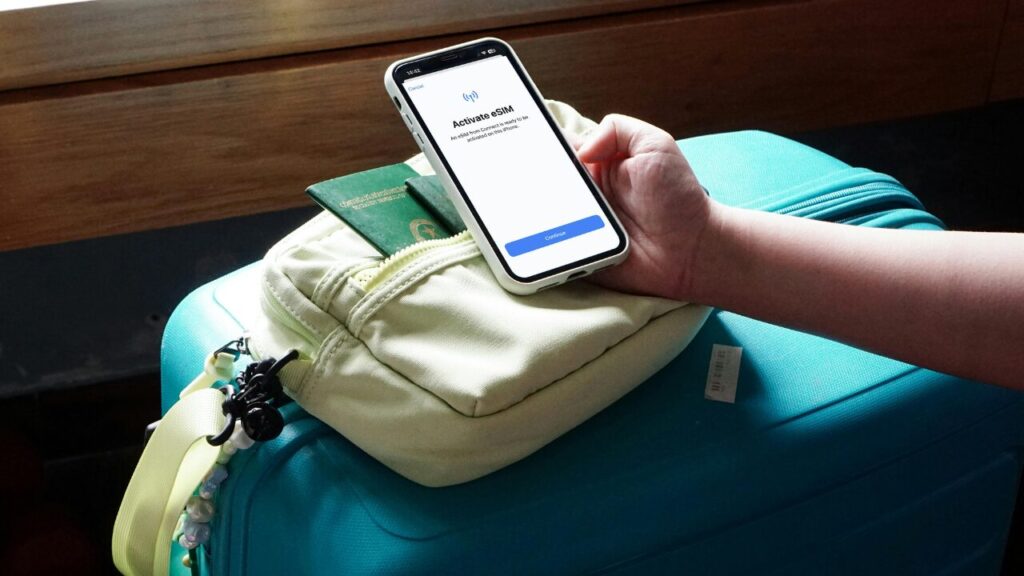
SIM: Works with almost all smartphones, including older models.
eSIM: Only works with newer devices that support eSIM, so you need to check your phone before buying.
Price (Cost)

SIM: Prices are generally affordable and similar across providers.
eSIM: Often offers flexible plans and can sometimes be cheaper, especially when purchased online.
Speed & Stability (Internet Quality)

SIM: Very stable and reliable connection, especially when using major Japanese networks.
eSIM: Offers similar speed and performance, but it may vary depending on the provider you choose.
| Feature | SIM Card | eSIM |
|---|---|---|
| Setup | Insert a physical card into your phone | Scan a QR code and activate digitally |
| Convenience | Need to swap SIM and keep original safe | No physical handling required |
| Compatibility | Works on almost all smartphones | Only works on eSIM-supported devices |
| Price | Standard pricing | Often flexible and sometimes cheaper |
| Speed & Stability | Stable and reliable | Similar performance (depends on provider) |
| Best For | First-time travelers | Short trips / tech-savvy users |
Which One Should You Choose?
Choosing between a SIM card and an eSIM depends on your travel style, your smartphone, and how comfortable you are with setting things up.

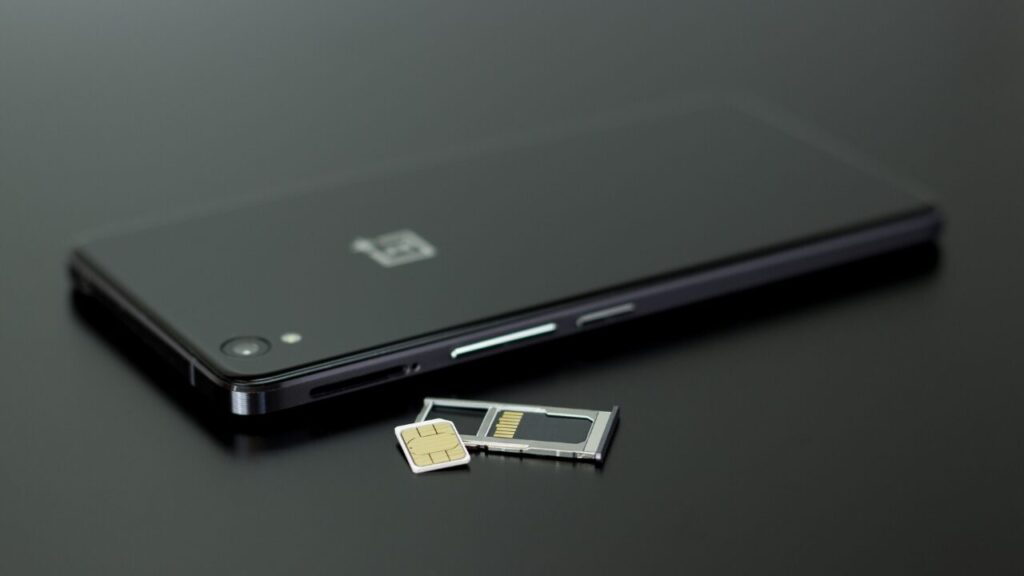
If this is your first time visiting Japan and you’re not very familiar with mobile settings, a SIM card is the easiest and safest option.
You simply insert the card into your phone, and in most cases, it works right away or with very simple instructions. It’s also compatible with almost all smartphones, so you don’t need to worry about device support.
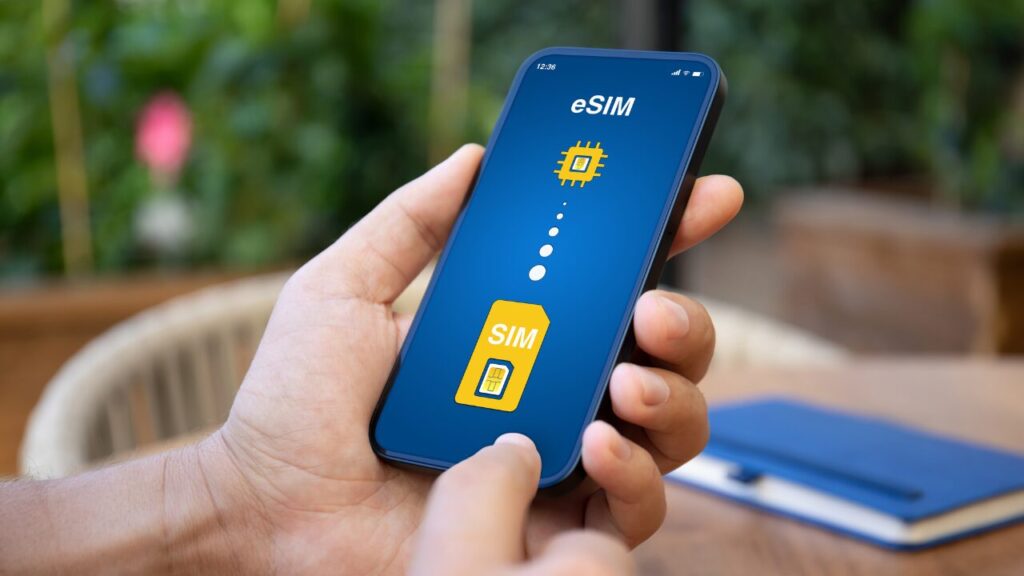
On the other hand, an eSIM is perfect if you want a faster and more convenient experience.
You don’t need to open your phone or replace anything. Just scan a QR code, follow a few steps, and your data plan is ready. You can even set it up before your trip and start using the internet as soon as you arrive in Japan.
However, eSIM requires a compatible device and a basic understanding of smartphone settings. If you’re not comfortable with digital setup, it might feel a bit confusing at first.
In short:
If you want something simple, reliable, and beginner-friendly
→ SIM card
If you want a quick, modern, and hassle-free setup
→ eSIM
Recommended SIM Cards for Japan Travel
Here are some reliable SIM card options for travelers visiting Japan. Each has different strengths depending on your needs.
Most of Japanese use 4 major carriers including me.
For travel sim will be provided by distributor instead of 4 carriers
Japan Travel SIM (IIJmio)
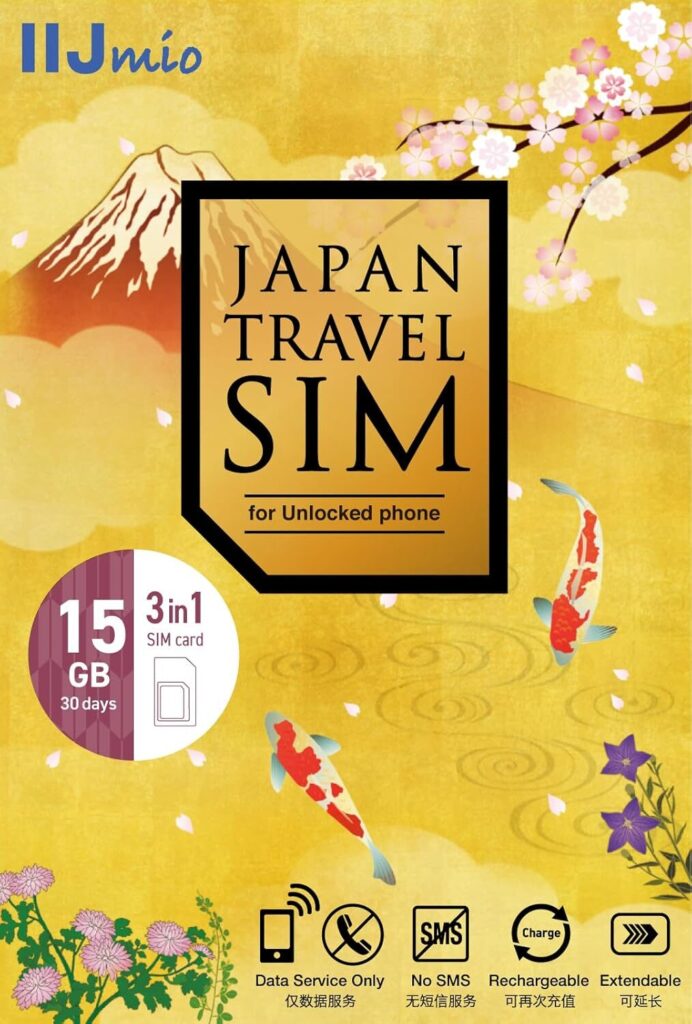
This is one of the most common prepaid SIM cards in Japan and is widely available at airports, convenience stores, and electronics shops. It uses a major Japanese network, providing stable coverage in cities and tourist areas
It’s very easy to use, with simple instructions in English, making it a great option for beginners.
| GB | Price | Day | |
| 3GB | 2,000JPY | 30day | Amazon |
| 6GB | 2,211JPY | 30day | Amazon |
| 10GB | 2,632JPY | 30day | Amazon |
| 15GB | 2,843JPY | 30day | Amazon |
| 25GB | 3,685JPY | 30day | Amazon |
※The price will be changed
Rakuten Mobile SIM
photo by Rakuten mobile
Rakuten Mobile is one of Japan’s major mobile carriers and is known for its affordable pricing and simple plans. It offers high-speed data in urban areas and is a popular choice among residents.
For travelers, it can be a good option if you are looking for a budget-friendly SIM with generous data usage. However, coverage may be slightly less stable in rural areas compared to other major carriers.
I am using Rakuten mobile in Japan
| GB | Price | Day | |
| 10GB | 1,880JPY | 180day | Amazon |
| 15GB | 2,480JPY | 180day | Amazon |
| 20GB | 2,480JPY | 180day | Amazon |
| 50GB | 4,480JPY | 180day | Amazon |
| 20GB | 2,480JPY | 360day | Amazon |
| 50GB | 4,580JPY | 360day | Amazon |
docomo SIM (NTT Docomo Network)

Photo by docomo
docomo is Japan’s largest and most reliable mobile network, offering excellent coverage across the country, including rural and remote areas.
SIM cards that use the docomo network are known for their strong signal and consistent speed, making them a very dependable option for travelers.
| GB | Price | Day | |
| 10GB | 2,400JPY | 90day | Amazon |
| 10GB | 2,490JPY | 180day | Amazon |
| 15GB | 2,600JPY | 90day | Amazon |
| 25GB | 3,280JPY | 90day | Amazon |
| 35GB | 4,280JPY | 90day | Amazon |
| 50GB | 5,480JPY | 90day | Amazon |
SoftBank SIM (SoftBank Network)

photo by softbank
SoftBank provides fast data speeds in urban areas and is widely used across Japan. It offers good performance in cities, transportation hubs, and tourist areas.

However, coverage in remote areas is slightly weaker compared to docomo.
| GB | Price | Day | |
| 10GB | 2,280JPY | 90day | Amazon |
| 10GB | 2,180JPY | 180day | Amazon |
| 18GB | 2,870JPY | 90day | Amazon |
| 20GB | 2,680JPY | 30day | Amazon |
| 20GB | 2,880JPY | 90day | Amazon |
au SIM (KDDI Network)

photo by au
au (by KDDI) is known for its balanced performance, offering both solid coverage and stable speeds. It performs well in both cities and suburban areas.
It is slightly less common for travel SIM options but still a reliable choice.
Quick Summary
If you want the safest choice → docomo
If you want speed in cities → SoftBank
If you want balance → au
If you want the cheapest → Rakuten Mobile
will move to each section
Recommended eSIM for Japan Travel
Airalo eSIM
Airalo is one of the most popular eSIM providers for international travelers. It offers affordable data plans and a very simple setup process.
You can purchase and install the eSIM before your trip, so you’re connected as soon as you land in Japan.
Features:
Easy app-based setup
Affordable short-term plans
Works immediately after arrival
Standard Data Plans
| Duration | Data | EUR | USD | JPY |
|---|---|---|---|---|
| 3 days | 1GB | €3.50 | $3.78 | ¥560 |
| 3 days | 3GB | €6.50 | $7.02 | ¥1,040 |
| 7 days | 3GB | €7.00 | $7.56 | ¥1,120 |
| 7 days | 5GB | €9.00 | $9.72 | ¥1,440 |
| 7 days | 10GB | €15.00 | $16.20 | ¥2,400 |
| 15 days | 5GB | €9.50 | $10.26 | ¥1,520 |
| 15 days | 10GB | €15.50 | $16.74 | ¥2,480 |
| 15 days | 20GB | €21.00 | $22.68 | ¥3,360 |
| 30 days | 5GB | €10.00 | $10.80 | ¥1,600 |
| 30 days | 10GB | €16.00 | $17.28 | ¥2,560 |
| 30 days | 20GB | €22.00 | $23.76 | ¥3,520 |
Unlimited Data Plans
| Duration | Data | EUR | USD | JPY |
|---|---|---|---|---|
| 3 days | Unlimited | €10.50 | $11.34 | ¥1,680 |
| 5 days | Unlimited | €17.50 | $18.90 | ¥2,800 |
| 7 days | Unlimited | €24.00 | $25.92 | ¥3,840 |
| 10 days | Unlimited | €31.00 | $33.48 | ¥4,960 |
| 15 days | Unlimited | €43.50 | $46.98 | ¥6,960 |
| 30 days | Unlimited | €66.00 | $71.28 | ¥10,560 |
You can use immediately once you arrive at Japan
>>Check Official Websete for details
trifa eSIM
trifa is a Japan-based eSIM provider known for its reliable connection using the docomo network, which offers excellent coverage across Japan, including rural areas.
It’s a great option if you want a stable and stress-free connection throughout your trip, especially when traveling beyond major cities.
Features:
Reliable docomo network coverage
Japanese company with strong local support
Simple app-based setup and management
| Duration | Data | USD | JPY |
|---|---|---|---|
| 3 days | 1GB | $4.50 | ¥680 |
| 3 days | 3GB | $8.50 | ¥1,280 |
| 7 days | 5GB | $12.00 | ¥1,800 |
| 7 days | 10GB | $18.00 | ¥2,700 |
| 15 days | 10GB | $20.00 | ¥3,000 |
| 30 days | 20GB | $30.00 | ¥4,500 |
>>Check Official Websete for details
Rakuten Mobile e-SIM
photo by Rakuten mobile
Rakuten Mobile is one of Japan’s major mobile carriers and is known for its affordable pricing and simple plans. It offers high-speed data in urban areas and is a popular choice among residents.
For travelers, it can be a good option if you are looking for a budget-friendly SIM with generous data usage. However, coverage may be slightly less stable in rural areas compared to other major carriers.
I am using Rakuten mobile in Japan
| GB | Price | Day | |
| 10GB | 1,880JPY | 180day | Amazon |
| 15GB | 1,980JPY | 180day | Amazon |
| 20GB | 2,480JPY | 180day | Amazon |
| 30GB | 2,680JPY | 180day | Amazon |
| 50GB | 3,980JPY | 180day | Amazon |
| 100GB | 5,580JPY | 180day | Amazon |
| 200GB | 9,980JPY | 180day | Amazon |
| 300GB | 14,980JPY | 180day | Amazon |
Which SIM is Best for You?
If you are a first-time visitor
→ docomo or Airalo
Simple setup, widely available, and beginner-friendly. Perfect if you want a stress-free experience.
If you want the cheapest option
→ Rakuten Mobile
Affordable plans with large data options, especially in cities. Ideal for budget travelers.
If you need the most stable connection
→ docomo-based SIM / trifa eSIM
Best coverage across Japan, including rural areas. Great for travelers going beyond major cities.
If you want fast speed in cities
→ SoftBank SIM
Excellent performance in urban areas and tourist spots. Suitable for short stays in cities.
If you want unlimited data
→ Airalo Unlimited / Rakuten Mobile
Perfect for heavy users who stream videos, use maps frequently, or upload content.
If you want the easiest setup
→ eSIM (Airalo / trifa)
No need to swap SIM cards. Just scan a QR code and get connected instantly.
Ready to Stay Connected in Japan?

Having mobile data in Japan will make your trip significantly easier, smoother, and far more enjoyable.
Japan has one of the most efficient but complex transportation systems in the world. From navigating train routes with Google Maps to checking timetables, translating menus, using cashless payments, or booking restaurants, having a reliable internet connection is almost essential for a stress-free trip.
While free Wi-Fi is available in some places like airports, hotels, and convenience stores, it can be inconsistent and not always available when you need it most. This is why having your own mobile data is highly recommended.

For most travelers, an eSIM such as Airalo offers the best balance of price, convenience, and ease of use. You can set it up before your trip, avoid the hassle of swapping SIM cards, and get connected instantly as soon as you arrive in Japan.
On the other hand, if you prefer a more traditional option or want maximum compatibility with your device, a physical SIM card is still a reliable and safe choice. It works with almost any smartphone and provides stable connectivity, especially when using major Japanese networks.
In the end, the best option depends on your travel style, your device, and how comfortable you are with technology. But whichever you choose, having mobile data will make your experience in Japan much more convenient and enjoyable.
Save this guide and choose the perfect season for your Japan adventure
Thank you for reading!! I hope you enjoy traveling Japan.

Von voyage 🇯🇵